 Image 1 of 4
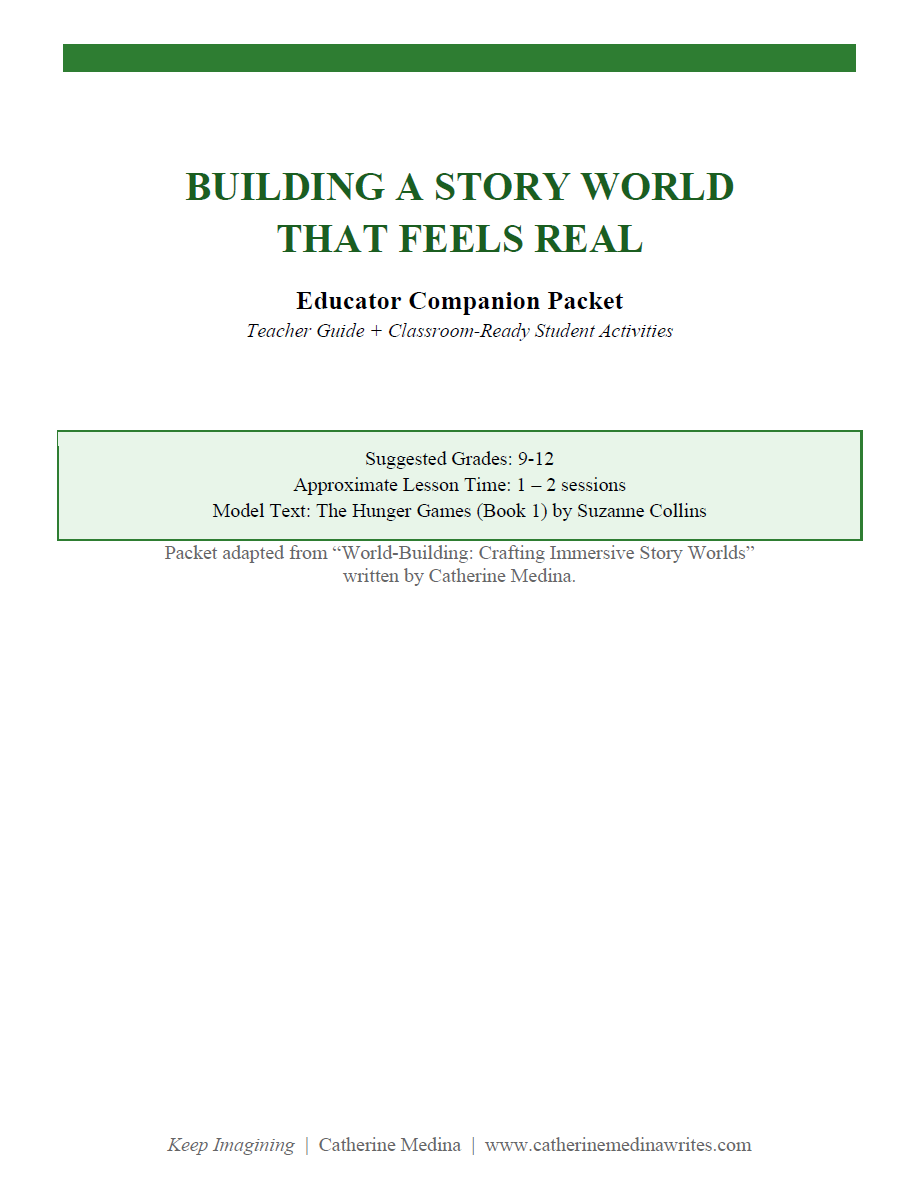 Image 2 of 4
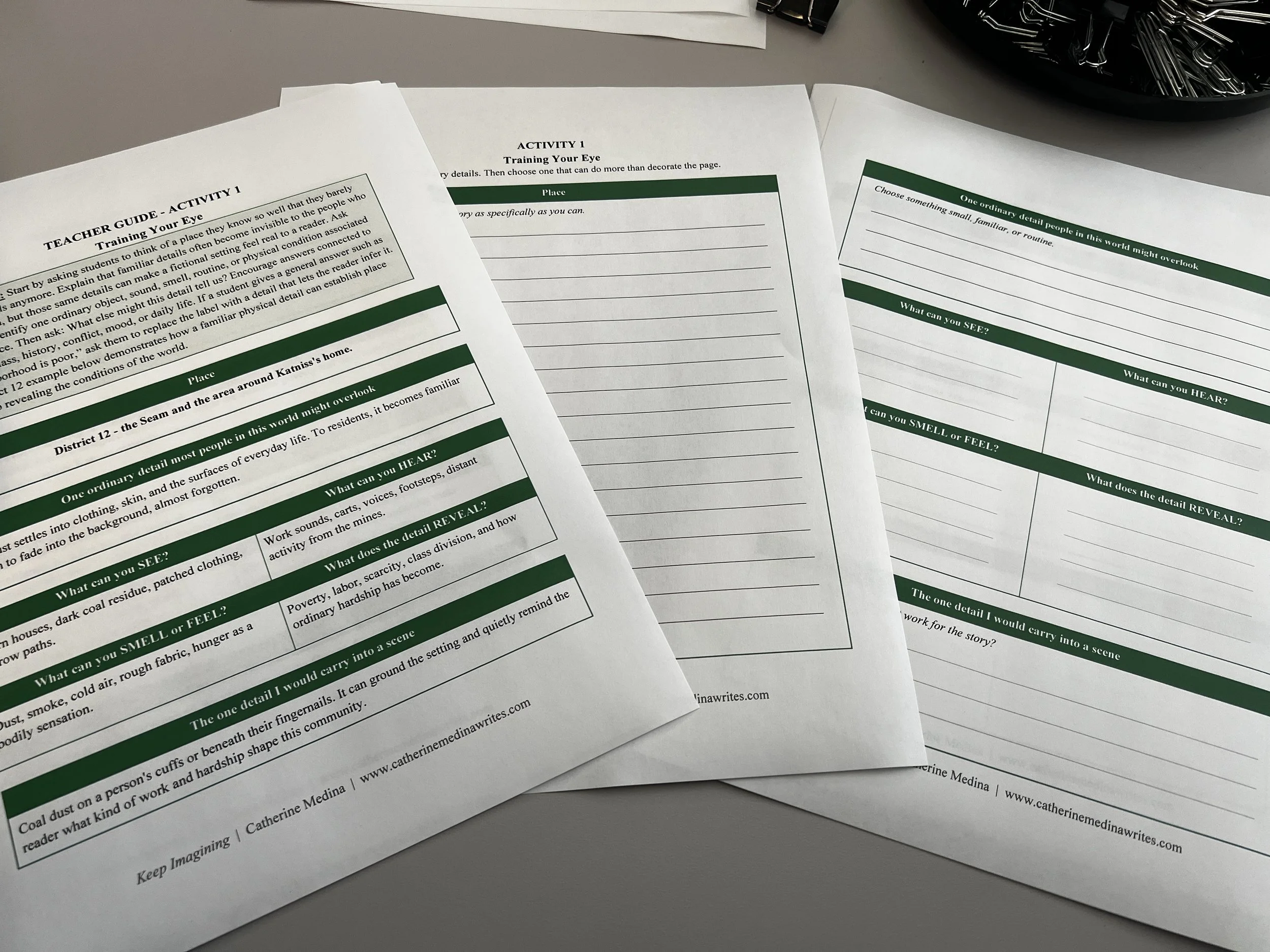 Image 3 of 4
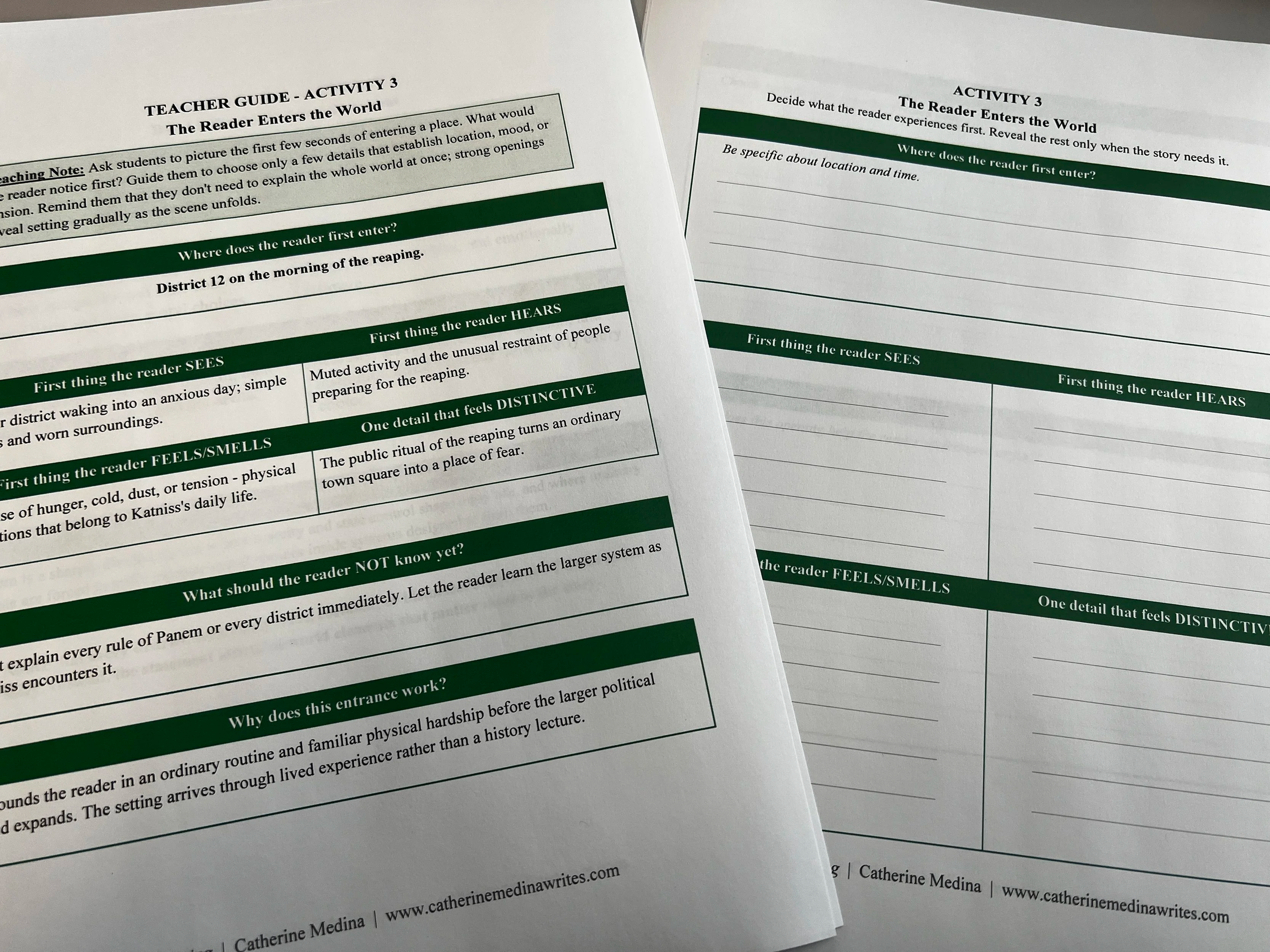 Image 4 of 4
Help students create fictional settings that feel vivid, believable, and connected to the story.
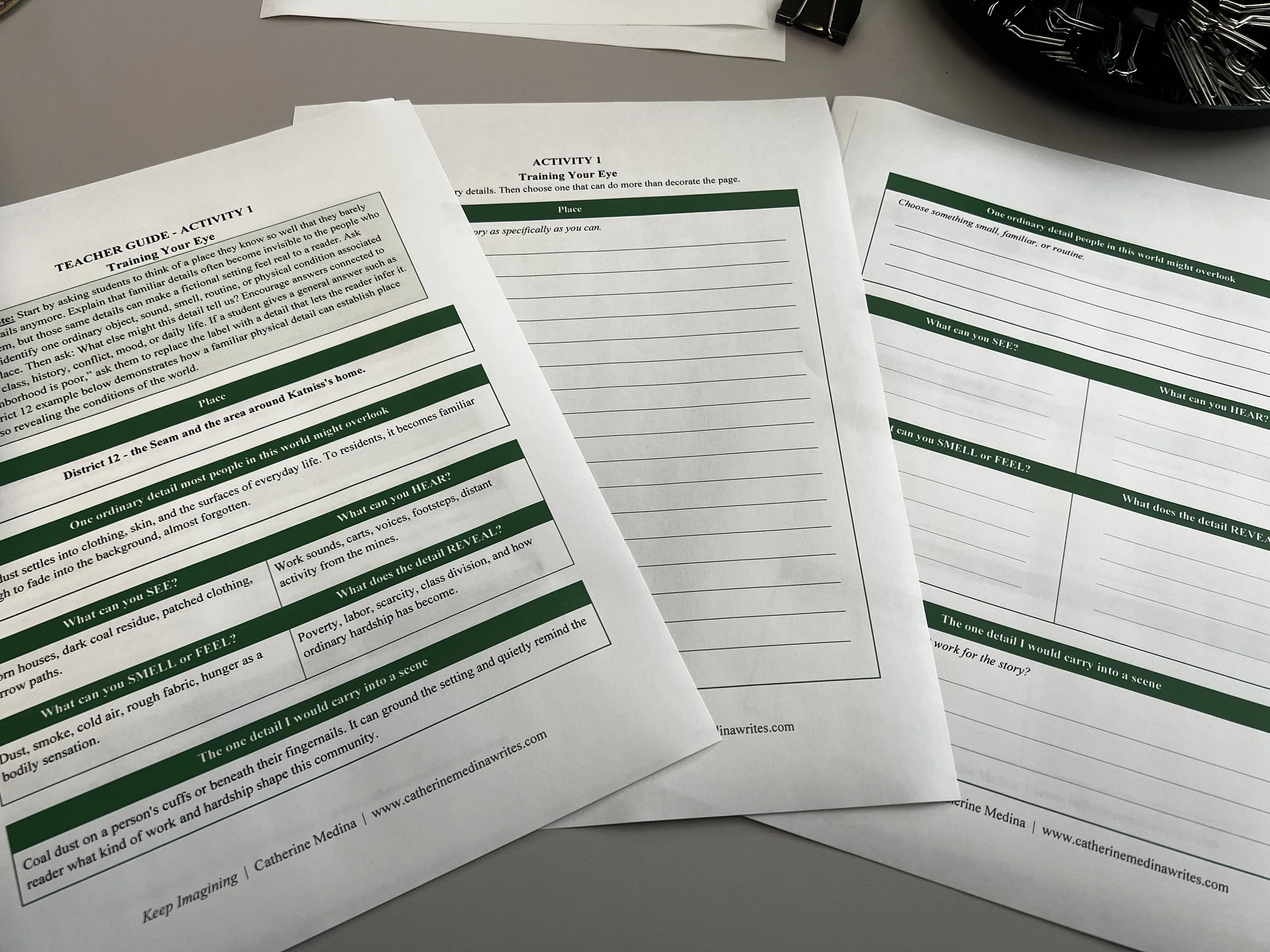
This 15-page printable creative writing resource for grades 9–12 includes a teacher guide, completed model activities using The Hunger Games by Suzanne Collins, four matching student worksheets, and an optional writing extension. It is designed for approximately 1–2 class sessions and works well for ELA classrooms, creative writing courses, homeschool instruction, writing clubs, and teen workshops.
Students will practice:
using sensory and ordinary details to build believable settings;
connecting setting to character, mood, conflict, and social conditions;
showing how a story world can create pressure and limit choices;
controlling what readers learn first; and
creating a focused world-building statement.
Includes: teacher guidance, completed examples, printable student activity pages, and a 300–500-word writing extension.
Purchase includes permission for one educator to print and reproduce the student activity pages for use with their own students. You may not redistribute, resell, publicly post, or share the complete resource with other educators.
The Hunger Games is referenced solely as a literary teaching example. This resource is independently created and is not affiliated with or endorsed by Suzanne Collins, Scholastic, or associated rights holders.
Adapted from Catherine Medina’s World-Building: Crafting Immersive Story Worlds — A Beginner’s Guide.
Want to go deeper?
World-Building: Crafting Immersive Story Worlds — A Beginner’s Guide expands these concepts into a complete 106-page workbook covering purpose, conflict, geography, climate, culture, society, rules, symbolism, integration, and more.